Updated 2026-07-30 · Author: Michael Torres, iGaming Industry Analyst
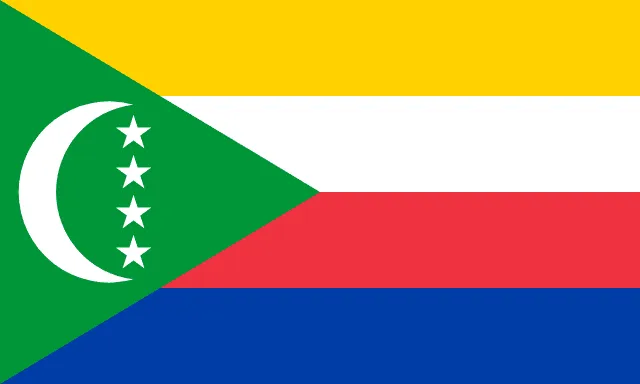 The flag shown is that of the Union of the Comoros. Anjouan is an autonomous island within the Comoros, and it issues gaming licences under its own offshore framework.
If you want the cheapest, fastest way to get a casino licence in your hands in 2026, Anjouan is the answer most operators land on. The regulator’s pack runs in the low-to-mid five figures rather than the six figures a serious EU licence costs, and a clean file can be approved in weeks rather than half a year. That combination is the entire pitch, and it is why Anjouan went from obscure to one of iGaming’s busiest jurisdictions in barely two years.
The catch is everything the price tag does not buy. An Anjouan licence does not open regulated Europe, the UK, or the US, it carries a reputation that some banks and payment processors treat as a red flag, and it sits close to the grey market by design. Below I walk through what the licence actually is, the real numbers, which markets you can and cannot touch, and the honest trade-offs, so you can decide whether it fits your launch or just looks like it does.
Key facts (verify current rules before acting)
- Jurisdiction: Anjouan, an autonomous island within the Union of the Comoros in the Indian Ocean. The remote-gaming framework dates to the Computer Gaming Licensing Act 007 of 2005.
- Who issues it: Administered by Anjouan Licensing Services Inc. (ALSI), with oversight tied to the Anjouan Offshore Finance Authority (AOFA) and the island’s betting and gaming board. Verify the administrator and any licence number directly.
- Cost: Very low by industry standards. The regulator’s fee is widely cited around €13,000 to €18,000 for a B2C or B2B licence, with typical first-year go-live budgets often quoted in the €20,000 to €40,000 range once agents and setup are added. Treat all figures as indicative and confirm current pricing.
- Timeline: Fast. Commonly quoted at roughly two to six weeks from a complete file, sometimes stretching to a couple of months end to end.
- Scope: One authorisation can cover both B2C operation and B2B supply across multiple verticals.
- Market limits: Not recognised in the EU, UK, or US regulated markets. Several countries must be geo-blocked, and it does not passport anywhere.
This is editorial guidance, not legal advice; confirm current rules with the regulator and a licensed gaming lawyer.
What is the Anjouan licence?
Anjouan is one of the islands that make up the Union of the Comoros, a small nation in the Indian Ocean between Mozambique and Madagascar. It is not a country of its own; it is an autonomous island within the Comoros with the authority to run an offshore financial and gaming regime under its own statute. That statute is generally cited as the Computer Gaming Licensing Act 007 of 2005, which is why you sometimes see the licence referenced with an “007” or similar code.
In practice the licence is administered by Anjouan Licensing Services Inc., usually shortened to ALSI, which acts as the official administrator and the main point of contact for applicants. Financial-crime and fit-and-proper oversight is associated with the Anjouan Offshore Finance Authority and the island’s betting and gaming board. The important structural point for an operator is that a single Anjouan authorisation can cover both B2C activity, meaning running a casino and taking bets, and B2B supply, meaning providing software or services to other licensed operators. That breadth under one licence is part of the appeal, and it is a genuine difference from jurisdictions that force you to split those into separate permits.
Why it exploded in popularity
Anjouan did not win its market share on merit alone. It won it because Curaçao, the default cheap offshore licence for two decades, spent 2023 through 2025 reforming itself, and that reform created uncertainty operators hated. Curaçao’s LOK legislation replaced the old master-and-sub-licence model with direct licensing by a new regulator, raised expectations, and left a window where the timeline, cost, and process of the old route were all in flux. When your usual fast, cheap option suddenly looks slow and unpredictable, you go shopping.
Anjouan was standing right there with the pitch operators wanted: cheaper than the new Curaçao, faster to grant, crypto-friendly by default, and light on documentation. For a bootstrapped brand testing a market, or a crypto casino that just needs a compliant-looking base to open payment rails, that was enough. The migration was fast and visible, and it pulled a lot of platform providers along with it. The full picture of how these jurisdictions stack up sits in the licensing guide, but the short version is that Anjouan’s growth was Curaçao’s reform turned into someone else’s opportunity.
Cost breakdown
The honest answer on cost is that the headline is genuinely low, and the all-in number depends heavily on who you hire and what you bolt on. Published figures move around and vendors quote differently, so treat the table below as indicative rather than a price list, and confirm current fees with the administrator before you budget.
[TABLE: Indicative Anjouan licence costs, 2026]
| Item | Indicative figure | Notes |
|---|---|---|
| Regulator licence fee (B2C or B2B) | ~€13,000 to €18,000 | Often cited as a core fee plus compliance-officer and monitoring add-ons; payable at issuance and on annual renewal. |
| B2B licence recognition certificate | ~€9,500 per year | Required since mid-2025 for suppliers serving Anjouan-licensed operators, unless they hold a local B2B licence. |
| Additional domains | Small per-domain fee | A few hundred euros per licensing cycle on B2C licences. |
| Typical first-year go-live budget | ~€20,000 to €40,000 | Regulator fees plus agents, incorporation, and integrations. Varies widely by setup. |
Set that against Malta, where fixed fees plus the substance and compliance bench push real costs into six figures, or the reformed Curaçao, where operator-level annual fees alone run far higher. Anjouan’s whole reason for existing is to sit well below both.
Process and timeline
The process is deliberately lightweight, which is the source of both its speed and its reputation problem. A typical path looks like this:
- Engage an agent or the administrator and set up the corporate vehicle the licence sits under.
- Submit the application file, including due-diligence documents on beneficial owners, source-of-funds material, a business plan, and technical and AML policies.
- Fit-and-proper and AML checks are run on the principals; this is where a light-touch regime still expects clean paperwork.
- Pay the regulator fee and address any follow-up questions.
- Receive the licence, commonly quoted at around two to six weeks from a complete file, though real timelines can run to a couple of months once corporate setup and back-and-forth are included.
The single biggest determinant of speed is whether your file is genuinely complete on day one. A clean, well-prepared application moves fast; a messy one stalls anywhere.
Which markets can you target?
This is the section that decides whether Anjouan is right for you, and it is where operators fool themselves. An Anjouan licence gives you permission under Anjouan law to operate. It does not override the law of the country your players sit in, and it does not passport into any major regulated market.
You cannot lawfully use it to serve the United States, the United Kingdom, or regulated EU markets. Standard restricted lists also require geo-blocking of countries such as Australia, France, Germany, Spain, the Netherlands, and Austria, alongside the Comoros itself and FATF-blacklisted jurisdictions. Verify the current restricted list, because it changes and your payment partners will hold you to it.
What is left is the .com and emerging-markets space: regions where offshore-licensed operators are tolerated or unregulated, and where a fast, crypto-friendly base is enough to launch. That is a real and large market. It is just not the regulated West, and treating an Anjouan licence as if it were is how brands get blocked. If your target is a specific banned or grey market, model the risk honestly first; the market-entry mechanics for a permitted launch sit in how to launch an online casino and the break-even calculator.
Taxes and ongoing compliance
The tax story is simple and genuinely favourable: Anjouan does not levy gaming tax on gross gaming revenue the way onshore jurisdictions do, and there is no local VAT on the activity. For a margin-sensitive operator that is a real advantage, and it is a large part of why crypto brands favour the jurisdiction.
Ongoing compliance is lighter than a tier-one regulator but is no longer nothing. Since mid-2025 the jurisdiction tightened its B2B rules, requiring suppliers to hold a local B2B licence or an approved recognition certificate, which was a deliberate move to look more serious. Licensees are expected to run AML and KYC controls, geo-block restricted markets, keep a compliance officer, and renew annually. The practical driver behind all of this is not just the regulator; it is your bank. Staying bankable means holding to standards above the legal minimum, because payment partners judge Anjouan portfolios harshly. A deeper view of what a full control set looks like is in the compliance stack.
Pros and cons ⚠️
The trade is stark, so I will keep it plain.
Pros. It is cheap, often the cheapest credible option on the table. It is fast, with grants in weeks not months. One licence covers B2C and B2B across verticals. There is effectively no gaming tax. It is crypto-friendly by default, which matters enormously for Web3 and token-based products.
Cons ⚠️. Reputation is the headline risk. Anjouan is repeatedly named in coverage of the grey and black market, and some operators have used its licences as a thin veneer of legitimacy while serving banned markets, which drags the whole jurisdiction’s standing down. That reputation feeds directly into banking and payments: tier-one processors and banks may decline or scrutinise Anjouan-licensed businesses, so your effective cost of running payment rails can be higher than the cheap licence suggests. Enforcement is limited, which cuts both ways; it means fewer protections and a regulator with a smaller stick, so the jurisdiction’s credibility rests more on your own conduct than on the badge. Finally, it gives zero access to regulated markets, so it is often a starter or supplementary licence rather than a permanent home.
Anjouan vs Curaçao vs Malta
Think of these three as points on a single line from cheap-and-fast to expensive-and-trusted.
Anjouan is the cheapest and fastest, with the weakest reputation and no market access beyond .com and emerging regions. Curaçao, post-reform, is a step up: still offshore and crypto-friendly, more expensive than Anjouan, with a reputation that is climbing under new regulation but still entry-tier. Malta is the other end entirely: an EU member-state licence that buys banking trust, tier-one studios, and EEA standing, at a cost and timeline that dwarf both offshore options. The detailed head-to-heads live in the dedicated Curaçao casino license and Malta casino license pages, and the premium-versus-offshore trade is dissected in Curaçao vs MGA. The pragmatic move for an ambitious brand is to start cheap to validate a market, then migrate upward when volume justifies the cost.
Platforms that operate on an Anjouan licence
Several platform providers in our coverage now hold or support Anjouan licensing, which tells you the jurisdiction is now mainstream on the supply side.
Slotegrator obtained its own Anjouan B2B licence in August 2025 to supply software to Anjouan-licensed operators, and it also carries Curaçao coverage, which makes it a natural fit for operators launching on this route. NuxGame is Anjouan-licensed and leans explicitly into crypto and Web3 builds, so it suits operators whose product thesis is token-based or crypto-first. SoftGamings includes Anjouan among the multiple jurisdictions it can arrange, giving operators a licensing-plus-platform option under one roof.
Match the provider to your licence and market, not the other way around. The full independent ranking with licensing columns is in the comparison, and the scoring logic behind it is set out in the methodology.
Frequently asked questions
How much does an Anjouan gambling license cost?
The regulator’s fee is widely cited around €13,000 to €18,000 for a B2C or B2B licence, with typical first-year go-live budgets often quoted in the €20,000 to €40,000 range once agents, incorporation, and integrations are added. Figures vary by vendor and change over time, so confirm current pricing with the administrator before budgeting. B2B suppliers may also need a recognition certificate at roughly €9,500 a year.
Who issues the Anjouan gaming license?
It is administered by Anjouan Licensing Services Inc., commonly shortened to ALSI, under Anjouan’s offshore framework dating to the Computer Gaming Licensing Act of 2005. Financial-crime and fit-and-proper oversight is associated with the Anjouan Offshore Finance Authority and the island’s betting and gaming board. Always verify the administrator and any licence number directly rather than trusting a brochure.
How long does it take to get an Anjouan license?
Commonly quoted at roughly two to six weeks from a complete file, sometimes stretching to a couple of months end to end. The biggest factor is whether your application is genuinely complete on submission, including due-diligence documents, source-of-funds material, and AML policies. A clean file moves fast; a messy one stalls.
Which markets can an Anjouan license serve?
It suits .com and emerging markets where offshore operators are tolerated, but not regulated Western markets. You cannot lawfully use it for the US, UK, or regulated EU jurisdictions, and countries such as Australia, France, Germany, Spain, the Netherlands, and Austria typically must be geo-blocked. It does not passport anywhere, so verify the current restricted list.
Is an Anjouan license reputable?
It is a legitimate licence but carries a weaker reputation than Curaçao or Malta. Anjouan is frequently named in grey and black-market coverage, and some operators have abused its licences, which affects how banks and payment processors view the jurisdiction. Its 2025 tightening of B2B rules was an effort to look more serious. Your own conduct matters more here than the badge.
Is Anjouan good for a crypto casino?
Yes, it is one of the more crypto-friendly offshore options. It supports crypto by default, levies no gaming tax, and is fast and cheap to obtain, which is why Web3 and token-based projects favour it. The trade-off is the same reputation and banking scrutiny that applies to the jurisdiction generally, so pair it with a genuinely strong AML and KYC control set.
Related
- Licensing Guide: the full jurisdiction roster and how to verify a provider’s licence
- Curacao Casino License: the reforming offshore option, compared in detail
- Malta Casino License: the premium EU route and what it buys
- Curacao vs Mga: the offshore-versus-premium trade, head to head
- Compliance Stack: the control set that keeps an offshore brand bankable
- White Label Casino Cost and Break Even Calculator: modelling the real launch numbers
- Master Comparison: independent ranking of white-label and turnkey providers
- Provider dossiers: Slotegrator · NuxGame · SoftGamings
This is editorial guidance, not legal advice; confirm current rules with the regulator and a licensed gaming lawyer. This site may earn referral commissions from provider links, disclosed transparently per FTC guidelines. No providers paid for placement or ranking.