Updated 2026-08-04 · Author: Michael Torres, iGaming Industry Analyst
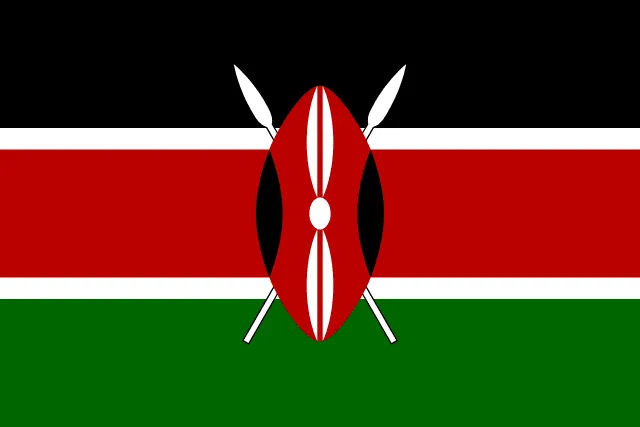 Kenya is East Africa’s biggest betting market, and in 2026 it is switching regulators mid-stride.
Launching an online casino in Kenya in 2026 means dealing with a regulator that has just changed its name and its powers. The Gambling Control Act 2025 replaced the 1966 Betting, Lotteries and Gaming Act and set up the Gambling Regulatory Authority (GRA) to take over from the Betting Control and Licensing Board (BCLB), the body most operators still know by name. You will need a Kenya-registered company, a licence under the new regime, and a payment stack built around M-Pesa. It is a sports-betting-first market where casino is the smaller, closely watched product. Below is the operator’s view of what is legal, who licenses you, what it costs, and where the risk sits.
Key facts (verify before you commit)
- The regulator is mid-transition. The Gambling Control Act 2025, in force from 26 August 2025, created the GRA to succeed the BCLB. A moratorium paused new licence processing during the handover. Confirm the GRA’s current licensing status before you plan a timeline.
- Sports betting dominates; casino is the smaller product. Kenya is East Africa’s largest, mobile-first gambling market, built on brands like SportPesa and Betika. Casino licences exist, but the volume and the regulatory attention sit on betting.
- You need a local footprint. Applicants must be a body corporate registered in Kenya with a physical address and audited accounts. A 30% Kenyan-shareholding rule applies to land-based operators; reporting suggests it does not bind online-only platforms, which you should confirm.
- M-Pesa is the rail. Safaricom’s M-Pesa, through paybill and short codes, carries most deposits and withdrawals, with Airtel Money and USSD alongside. The state has ordered Safaricom to cut betting paybills before, in 2019.
- The tax stack is heavy and moves yearly: roughly a 5% excise on deposits, a withholding tax on winnings that has swung between 5% and 20%, a 15% tax on gross gaming revenue plus a levy, and corporate income tax on top.
This is editorial guidance, not legal advice; confirm current rules with the regulator and a licensed gaming lawyer.
Is online gambling legal in Kenya?
Yes. Online gambling is legal and licensed in Kenya, and it has been a mainstream, mass-market activity for a decade. Kenyans bet through their phones on football and other sports at a scale that made the country a regional reference point. Casino products are legal too, licensed as a separate category, but they sit in the shadow of the sportsbook. A slots-and-live-dealer brand is entering a smaller, more scrutinised corner of a betting-led market.
The legal framework just changed. For decades the sector ran under the Betting, Lotteries and Gaming Act of 1966, administered by the BCLB. The Gambling Control Act 2025 repealed that statute, modernised the rules for online products, and handed regulation to the new GRA. The activity is legal, but the rulebook and the regulator are both new, so any guide older than a few months is unreliable here.
The BCLB regulator and licence types
The single most important fact for a 2026 launch is that the BCLB is being replaced by the GRA, and the handover is recent. The BCLB licensed and enforced under the 1966 Act; the Gambling Control Act 2025 makes the GRA its successor, with wider authority across betting, casino, lotteries and online products and stronger enforcement powers. During the transition the GRA paused new licence processing, and existing holders continue under their current terms until expiry.
Licence categories track the product. A bookmaker or betting licence covers sportsbook; a casino or gaming licence covers table games, slots and live dealer, in a venue or online; lotteries and prize competitions have their own permits. For an online casino you need the gaming licence plus the GRA’s online approvals. You can read the regulator’s own materials at the official BCLB site, but check whether guidance has migrated to the GRA before you rely on it. For how licence choice shapes the whole build, see our licensing guide.
How operators launch: local company or offshore
There are two realistic routes, and the compliant one runs through a Kenyan company and a Kenyan licence.
Route 1: a Kenyan company and a GRA licence. You register a company in Kenya, obtain a tax PIN, set up a physical office and local banking, and apply to the regulator for the relevant gaming licence. This is the durable path. It protects you against enforcement, payment cut-off and reputational risk in a market where the state watches gambling closely. It costs more and takes longer, and locks you into Kenya’s tax and reporting regime.
Route 2: an offshore licence aimed at Kenyan players. Some sites accepting Kenyan traffic hold a foreign licence, usually Curaçao or Anjouan, run in shillings, and plug into M-Pesa through local aggregators. It is faster and cheaper, and legally exposed: the state has shown it will act, whether by ordering Safaricom to block paybills or by refusing renewals. Know exactly what you are holding. Compare the options in our breakdowns of the Curaçao casino licence and the Anjouan casino licence, and weigh Curaçao against a tier-one regime in Curaçao vs MGA. The honest read for 2026 is that offshore-plus-local-payments is common, but the regulator is tightening, so build so you can migrate onshore if enforcement comes.
What licence you need and the requirements
For an online casino you need the gaming licence and the online approvals under the Gambling Control Act, held by a properly constituted Kenyan entity. The recurring requirements are below; the GRA is issuing new regulations, so confirm the exact thresholds before you spend.
- A Kenyan company. Register through the Business Registration Service, obtain a KRA tax PIN, and register for the relevant taxes. Foreign operators are licensable only if registered in Kenya with a local address and audited accounts.
- Local shareholding, product-dependent. A minimum 30% Kenyan shareholding has applied to land-based operators. Reporting indicates online-only platforms are treated differently, but confirm this with the GRA and local counsel rather than assume.
- Fit-and-proper checks. Directors and beneficial owners face background and probity review, so prepare clean KYC on the structure and the people behind it.
- Capital and compliance. Expect capital and bank-guarantee expectations, audited accounts, responsible-gambling tools, KYC and AML procedures, data-protection registration, and platform technical standards.
Because the GRA is still bedding in, treat any published list as a starting point and get the current schedule in writing. For the end-to-end sequence, see how to launch an online casino.
Cost and the heavy tax stack
Budget in two buckets, the platform build and the licensing-plus-tax burden, and treat Kenya’s tax stack as the line that can sink an otherwise healthy model. The software model drives most of the platform cost. A white-label launch is the fastest and cheapest entry, typically low-to-mid five figures in USD to start, while turnkey and custom builds cost more and take longer. Our white-label casino cost breakdown has the current ranges.
The tax stack is where Kenya differs from most markets. You are not modelling one gaming tax but a chain of them, several falling on the player in ways that hit your volumes, which squeezes both your margin and your players’ effective returns. Model conservatively, then run your target GGR and cost base through the break-even calculator, because a mid-year rate change can move break-even by months.
Payments and localisation: M-Pesa is everything
A Kenya launch is won or lost on M-Pesa. Safaricom’s mobile-money service is the dominant deposit and withdrawal rail, and in a market where many players are effectively unbanked, it is the default, not one option among several. Deposits and payouts run through paybill numbers and short codes that Safaricom allocates, with Airtel Money as the secondary wallet and USSD letting players fund an account from a basic phone. A card-first checkout will underperform badly.
Localisation goes past currency. Price in shillings, keep withdrawals fast because players benchmark against sportsbook payout speeds, and put familiar M-Pesa branding front and centre at checkout. The catch is concentration: leaning on one telco for the whole payment stack is a structural risk. In 2019 the state ordered Safaricom to suspend betting paybills for dozens of operators during a tax dispute, and more recently Safaricom has flagged money-laundering monitoring on betting traffic. Build redundancy where you can and assume the rail can be turned off if compliance slips.
Taxes and ongoing obligations
Kenya’s gambling taxes change almost every finance cycle, so anchor to the current statute, not last year’s guidance. As of 2026 the shape is roughly this, and every figure below deserves a fresh check with a Kenyan tax adviser.
- Excise duty on stakes or deposits, cut from 15% to about 5% under the Finance Act 2025, with the charge point moved to money deposited for gambling. The base has since been broadened.
- Withholding tax on winnings, the most volatile line: restructured down to about 5% on withdrawals, then reintroduced at 20% on winnings for residents and non-residents under the Finance Act 2026. Confirm the live rate.
- Gross gaming revenue tax of 15%, introduced under the Gambling Control Act 2025, payable monthly, plus an additional levy of up to 1% of GGR earmarked for a problem-gambling fund.
- Corporate income tax on profits at standard rates, with higher effective rates for branches of foreign companies.
Beyond tax, expect monthly reporting, real-time transaction integration with the revenue authority, responsible-gambling obligations, and licence renewals. Staff for that overhead from day one.
Risks and red flags ⚠️
- ⚠️ Regulator in transition. The BCLB-to-GRA handover paused new licensing and is still settling, so timelines and requirements can shift under you.
- ⚠️ Payment-rail concentration. M-Pesa carries the market, and the state has cut betting paybills before. A single policy change can stop deposits overnight.
- ⚠️ Moving tax rates. Excise, withholding and GGR taxes have changed repeatedly since 2019. Any model built on a stale rate is wrong.
- ⚠️ Licence-renewal history. Kenya has form for mass non-renewals; in 2019 dozens of operators lost access, and in one year only a handful of firms were licensed. Renewal is not a formality.
- ⚠️ Sportsbook-first market. Casino is the smaller, more scrutinised product. A pure-casino brand fights the grain of player demand; a casino-plus-sportsbook build usually fits better.
Best platforms for the Kenyan market
For a sportsbook-led, mobile-money market with a shifting regulator, prioritise providers with real African footprint, sportsbook depth and hands-on licensing support. These four fit that profile.
- BetConstruct brings one of the deepest sportsbooks in the market and existing Africa exposure, which suits Kenya’s betting-first player base and a casino-plus-sportsbook build.
- Digitain pairs a strong in-house trading desk with retail and online experience across African markets, a fit if you want both online and shop-based reach.
- Slotegrator is a fast, flexible integrator well suited to emerging markets and quicker launches on a leaner budget.
- SoftGamings operates across multiple jurisdictions and offers hands-on licensing assistance, useful while the GRA regime is still settling.
Weigh sportsbook depth, M-Pesa integration and licensing support against your budget in the full comparison, and see our methodology for how these providers are scored.
Frequently asked questions
Is online casino legal in Kenya in 2026?
Yes. Online gambling, including casino gaming, is legal and licensed in Kenya. The framework changed under the Gambling Control Act 2025, which replaced the 1966 Act and moved regulation to the new GRA. Casino is a smaller, more scrutinised product than betting, but it is licensed, not banned.
Who regulates online gambling in Kenya now, the BCLB or the GRA?
Both names matter. The BCLB was the regulator under the 1966 Act. The Gambling Control Act 2025 created the GRA to succeed it, with broader powers over betting, casino, lotteries and online products. A moratorium paused new licensing during the handover, so confirm the GRA’s current status before planning a timeline.
Do I need a local Kenyan company to get a licence?
In practice, yes. Applicants must be a body corporate registered in Kenya with a physical address, local tax registration and audited accounts. A 30% Kenyan-shareholding rule has applied to land-based operators; reporting suggests online-only platforms are treated differently, which you should verify with the regulator.
How are online casino operators taxed in Kenya?
Through a stack, not a single tax. As of 2026 that means roughly a 5% excise on deposits, a withholding tax on winnings that has moved between 5% and 20%, a 15% tax on gross gaming revenue plus a problem-gambling levy, and corporate income tax on profit. Rates change almost every budget cycle, so confirm the live figures with a Kenyan tax adviser.
What payment methods must a Kenyan casino support?
M-Pesa above all. Safaricom’s mobile money, via paybill and short codes, carries most deposits and withdrawals, with Airtel Money and USSD alongside. Card penetration is low, so a card-only checkout underperforms. Price in shillings, keep withdrawals fast, and build some payment redundancy given past paybill suspensions.
Can I serve Kenyan players from an offshore licence?
Some operators do, usually on a Curaçao or Anjouan licence with local shilling payments. It is faster and cheaper, but legally exposed: the state has blocked betting payments and refused renewals before. Take Kenyan legal advice and build so you can migrate onshore if enforcement tightens.
Related
- Licensing guide
- Curaçao casino licence
- Anjouan casino licence
- Curaçao vs MGA
- How to launch an online casino
- White-label casino cost
- Break-even calculator
- Launch a casino in Nigeria
- Launch a casino in Ghana
- Launch a casino in South Africa
- Provider comparison
- Methodology
This is editorial guidance, not legal advice; confirm current rules with the regulator and a licensed gaming lawyer.