Updated 2026-08-04 · Author: Michael Torres, iGaming Industry Analyst
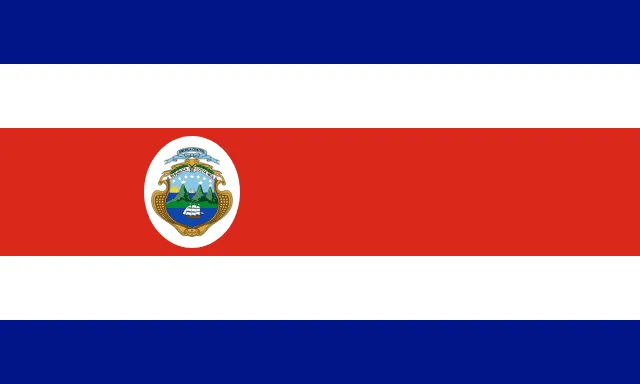 Costa Rica flies this flag over one of iGaming’s oldest offshore bases, yet it has never issued a single online gaming licence.
There is no Costa Rica casino license, and any vendor who tells you otherwise is selling you a company registration dressed up as a permit. Costa Rica has no gambling regulator, no gaming authority, and no statute that authorises online casinos aimed at foreign players. What operators call a “Costa Rica gaming license” is a general business incorporation plus a municipal permit, often marketed as a “data processing license.” It is real paperwork, but it certifies nothing about your gaming operation. This page explains exactly what the setup is, what it costs, which markets it reaches, and why treating it as a licence is the mistake that gets brands blocked. For the wider jurisdiction roster and how we grade licence fit, start with the licensing guide.
Key facts: Costa Rica “casino license” (2026)
- Regulator: none for online gaming. No gambling authority issues, supervises, or audits online casinos targeting foreign players. Verify this before you rely on any “licence” claim.
- What you actually get: a Costa Rican company (usually a Sociedad Anónima) plus a municipal business permit, or “patente,” often classified as data-processing or telecom services. This is not a gaming licence.
- Cost: low. Company setup is commonly quoted around US$3,000 to US$5,000, with all-in go-live packages often cited from roughly US$6,000 upward. Treat every figure as indicative and confirm current pricing.
- Timeline: fast, frequently quoted at about four to six weeks for the corporate and permit steps.
- Market reach: .com and grey or unregulated markets only. No recognition in the EU, UK, or US, and it passports nowhere.
- Tax: territorial system means foreign-source gaming revenue generally sits outside Costa Rican income tax, and there is no gaming tax. Local company obligations still apply.
This is editorial guidance, not legal advice; confirm current rules with the regulator and a licensed gaming lawyer.
1. Does Costa Rica issue an online casino licence?
No. Costa Rica does not issue an online casino licence, and it has no regulator that could. This is the single fact that separates it from every other jurisdiction in this cluster. Curaçao has the Curaçao Gaming Authority, Malta has the MGA, Anjouan has its offshore administrator. Costa Rica has nobody. Online gambling aimed at players outside the country is neither explicitly legal nor explicitly illegal; it simply sits in a gap the law never addressed.
The state does run gambling, but only its own. The Junta de Protección Social, the national social-protection lottery body, administers the domestic lottery and land-based products. It does not license, monitor, or approve private online casinos serving foreign markets. So when a formation agent advertises a “Costa Rica gambling license,” what they are actually offering is company registration in a country that happens to ask no gaming questions. The absence of a rulebook is the product.
2. How Costa Rica actually works: the data-processing company model
Operators incorporate a Costa Rican company and obtain a municipal business permit that classifies the firm as a data-processing or online-services provider, then run the actual gaming from and under a structure held elsewhere. The Costa Rican entity is the shopfront. The gambling licence, if the operator holds one at all, lives in another jurisdiction, and the wagering, payment processing, random number generation, and player contracts are meant to occur outside Costa Rican soil.
The permit itself comes from the municipality where the company registers its office, not from any national gaming body. Its language covers data handling and telecom-style services, which is why the marketing name “data processing license” stuck. The important thing to internalise is what this structure does not include: no gaming oversight, no player-protection regime, no responsible-gambling mandate, and no anti-money-laundering supervision from a gambling authority. Any AML or KYC you run, you run voluntarily, because your banks and software partners demand it, not because a regulator checks. This is the historical base that drew hundreds of offshore sportsbooks and “data centres” in the late 1990s and 2000s, for exactly the same reason: light-touch incorporation with no gaming rulebook attached.
3. What you actually get and set up (steps)
You get a functioning offshore company and a local permit, assembled in a handful of standard corporate steps rather than a licensing process. There is no application to a gaming board, no fit-and-proper vetting of owners by a regulator, and no technical certification of your platform. The path looks like this:
- Incorporate a Sociedad Anónima (S.A.) or an S.R.L., appointing directors and a resident agent, and register it with the National Registry.
- Obtain the cédula jurídica, the company tax identification number, from the tax authority.
- Register with the CCSS, the social-security fund, if you will employ local staff, and arrange workers’ insurance.
- Apply for the municipal patente in the canton where your office sits, classified for data-processing or online-services activity.
- Hold or arrange the actual gaming licence abroad, and keep wagering, payments, and player-facing operations outside Costa Rica, with Costa Rican residents excluded and geo-blocked.
That last step is the one operators skip at their peril. The Costa Rican company supports the business; it does not authorise the gambling, and forgetting that distinction is how a “licensed in Costa Rica” claim falls apart under scrutiny.
4. Cost breakdown (incorporation, patente, ongoing)
The setup is cheap, which is most of its appeal: company formation is commonly quoted at roughly US$3,000 to US$5,000, and complete go-live packages that bundle the permit, a local address, and basic compliance often start around US$6,000. The numbers below are planning figures gathered from formation agents, not a price list, so confirm live costs before you budget.
[TABLE: Indicative Costa Rica setup costs, 2026]
| Cost item | Indicative figure | Notes |
|---|---|---|
| Company incorporation (S.A. / S.R.L.) | ~US$3,000 to US$5,000 | Registry fees, articles, resident agent, name reservation |
| Municipal patente | Small; varies by canton | A local business tax, sometimes a percentage of gross revenue, sometimes a set periodic fee |
| Annual company tax (personas jurídicas) | Modest fixed levy | A recurring per-company charge that scales with activity |
| All-in go-live package | From ~US$6,000 upward | Company plus permit, local office, basic AML setup; varies widely |
| Local office and staff (if hosting onshore) | Varies | Premises lease, CCSS registration, workers’ insurance |
Set that against the offshore alternatives and the gap is real: Anjouan’s regulator fee alone runs into five figures, and reformed Curaçao asks tens of thousands a year plus local substance. Costa Rica undercuts both because you are not paying for a licence. To model how a base cost feeds into a full launch, use white-label casino cost and the break-even calculator.
5. Which markets can you (and cannot) target with it
Costa Rica reaches the .com grey field and nothing regulated: no EU, no UK, no US, and no passporting anywhere. Because there is no licence, there is no recognition to extend. A Costa Rican company gives you a place to bank the business and sign contracts, not a permission slip any regulated market will accept.
That rules out every jurisdiction that runs its own licensing regime. Serving UK, US, or regulated EU players from a Costa Rican structure means operating unlawfully in those markets, and payment processors treat it that way. What is left is the wide field of markets that either tolerate offshore .com operators or have no online regime at all, across parts of Latin America, Asia, and Africa. That is a genuine addressable audience, and it is where this setup has always lived. The catch is that the Costa Rican paperwork gives you zero regulatory cover if a target country tightens its rules, because you never had a gaming authorisation to point to. If your plan centres on a specific market, model the legal exposure first rather than assuming the company shields you.
6. Taxes and compliance reality
Costa Rica’s territorial tax system means gaming revenue earned from foreign players generally falls outside Costa Rican income tax, and there is no gaming tax, but the compliance you skip is protection you lose. For a margin-sensitive operator the tax position is genuinely attractive: no tax on offshore-source income, no gross-gaming-revenue levy, and residents pay no tax on winnings. The company still carries local duties, including the annual company tax, municipal patente charges, and social-security contributions on any local employees, so budget for filings even when the gaming income is untaxed.
The compliance reality is the harder part. No gambling regulator means no AML gaming supervision, no responsible-gambling framework, and no player-protection backstop. Whatever controls you run are self-imposed, and in practice your bank and your platform provider set the real standard. Reputable payment partners now expect a full AML and KYC stack regardless of where the company sits, so the money you save on a licence you spend building credibility another way. For what that control set looks like in full, see the compliance stack.
7. Pros and cons vs a real licence ⚠️
The trade is blunt: Costa Rica is the cheapest, lightest base available, and it buys you no regulatory credibility whatsoever. Weigh it against an actual licence, not against doing nothing.
Pros. Low cost, with no regulator fee to pay. Fast corporate setup, often inside six weeks. No gaming tax and a territorial system that leaves foreign revenue untaxed. Crypto-friendly by default, since no authority gates payment methods. A long, established history as an offshore hosting base, so agents and infrastructure are plentiful.
Cons ⚠️. It is not a licence, so it confers no standing in any regulated market and passports nowhere. Banking and fiat payment processing are difficult, which pushes many operators toward crypto rails and offshore acquirers. Reputation is weak, because “no oversight” reads as “no accountability” to banks, processors, and increasingly to serious software and payment partners who now avoid it. There is no player-protection regime, so disputes have no regulator to escalate to, which affects player trust. And the legal grey status means your only real defence is your own conduct.
8. Costa Rica vs Curaçao vs Anjouan
Line these three up and Costa Rica is the outlier: Curaçao and Anjouan give you an actual gaming licence, however entry-tier, while Costa Rica gives you a company and a shrug. That difference matters more than price.
Curaçao, after its LOK reform, is now direct state licensing with a public register, local-substance rules, and a reputation climbing under real oversight. Anjouan is the cheap, fast paper licence, weakly regarded but still a recognised gaming authorisation you can name to a bank. Costa Rica sits below both on credibility precisely because there is nothing to name. Where it can win is a very specific brief: an operator who already holds a licence elsewhere and wants a low-cost, tax-efficient operational or hosting base, rather than the licence itself. For most launches, an entry-tier licence beats a bare company. Read the full head-to-heads in the Curaçao casino license and Anjouan casino license guides, and see the premium EU alternative in the Malta casino license breakdown.
9. Platforms and partners that support this setup
Because Costa Rica offers no licence, the platform you choose carries more weight here than anywhere else: your partner’s compliance posture and payment relationships become the credibility the jurisdiction cannot supply. A handful of providers in our coverage are equipped for offshore and data-services builds like this one.
SoftGamings arranges multi-jurisdiction setups hands-on, which suits an operator who wants a partner to structure the licence-plus-hosting split correctly rather than improvising it. Slotegrator is an aggregator with strong reach into emerging and offshore markets, a fit for the grey-market audience this base actually serves. SoftSwiss brings a crypto-first orientation and long offshore experience, useful given the fiat-banking friction Costa Rica creates. Gamingtec offers white-label builds with crypto payment support, handy when card rails are hard to secure. Match the partner to your market and payment reality, then weigh them side by side in the comparison, scored per our methodology.
Frequently asked questions
Is there really no Costa Rica casino license?
Correct, there is no gaming licence. Costa Rica has no gambling regulator for online casinos aimed at foreign players. What is sold as a “Costa Rica gambling license” is company incorporation plus a municipal business permit, often labelled a data-processing license. It authorises the company to operate; it does not license or supervise gambling. Verify any “licence” claim before relying on it.
What is a Costa Rica data processing license?
It is a municipal business permit, not a gaming licence. The permit classifies your company as a data-processing or online-services provider and is issued by the canton where the office sits, not by any national gaming authority. It carries no gaming oversight, no player-protection rules, and no AML gaming supervision. The name is marketing shorthand, and it is easy to misread as a regulator’s approval.
How much does the Costa Rica setup cost?
Company formation is commonly quoted at roughly US$3,000 to US$5,000, with all-in go-live packages often starting around US$6,000. Add the municipal patente, a modest annual company tax, and local staff costs if you host onshore. Figures vary by agent and canton and change over time, so confirm current pricing before budgeting. There is no regulator fee, because there is no regulator.
Which markets can I serve from a Costa Rica company?
Only .com and grey or unregulated markets, never regulated ones. You cannot lawfully serve the US, UK, or regulated EU jurisdictions, and Costa Rican residents should be excluded and geo-blocked. The structure passports nowhere and provides no regulatory cover, so assess the law of each target market directly rather than assuming the company protects you.
Is Costa Rica good for a crypto casino?
It is workable, mainly because fiat banking is hard. With no licence to reassure banks, many operators lean on crypto and offshore payment rails, and Costa Rica gates no payment methods since no authority oversees them. The tax position helps too. The trade-off is the same weak reputation and absent player protection that applies to the jurisdiction overall, so pair it with a genuinely strong AML and KYC stack.
Is Costa Rica about to regulate online gambling?
Not yet, and the most recent attempt failed. A reform bill developed with input from the state lottery body was advanced through a legislative commission late in 2025 and then rejected in early 2026, leaving the gap intact. Proposals resurface periodically, driven by the revenue the state loses to unregulated operators, so treat the current no-regulator status as accurate today but subject to change.
Related
- Licensing guide: the full jurisdiction roster and how to verify a provider’s licence
- Curaçao casino license and Anjouan casino license: the two offshore licences Costa Rica is measured against
- Malta casino license: the premium EU route, for contrast
- Curaçao vs MGA: the offshore-versus-premium trade, head to head
- Compliance stack: the controls that keep an unlicensed-base operator bankable
- White-label casino cost and break-even calculator: model the real launch numbers
- Provider reviews: SoftGamings · Slotegrator · SoftSwiss · Gamingtec
- Comparison matrix and methodology
This is editorial guidance, not legal advice; confirm current rules with the regulator and a licensed gaming lawyer.