Updated: 2026-07-28 · Author: Michael Torres, iGaming Industry Analyst & Independent Consultant
A year-long cross-border investigation alleges that award-winning gambling-software group Soft2Bet and its partners took in around €600 million from a hidden web of unlicensed, blacklisted online casinos across Europe. The reporting, published by Investigate Europe and 15 country partners as the “Soft2Bet Files”, is built on leaked payment statements, internal chats and corporate records. Soft2Bet rejects the claims outright, calling them “baseless” and “defamatory.” This article summarizes what the investigation reports, separates the court-proven facts from the allegations, and explains why it matters for anyone buying or running a casino platform.
We are reporting on published journalism, not making independent findings of our own. Where something is an allegation, we say so. Where a court has ruled, we say that too.
Key takeaways
- The “Soft2Bet Files” allege that roughly €600 million flowed from two Cyprus firms to Soft2Bet and its partners between May 2020 and May 2024, according to leaked payment statements obtained by Investigate Europe.
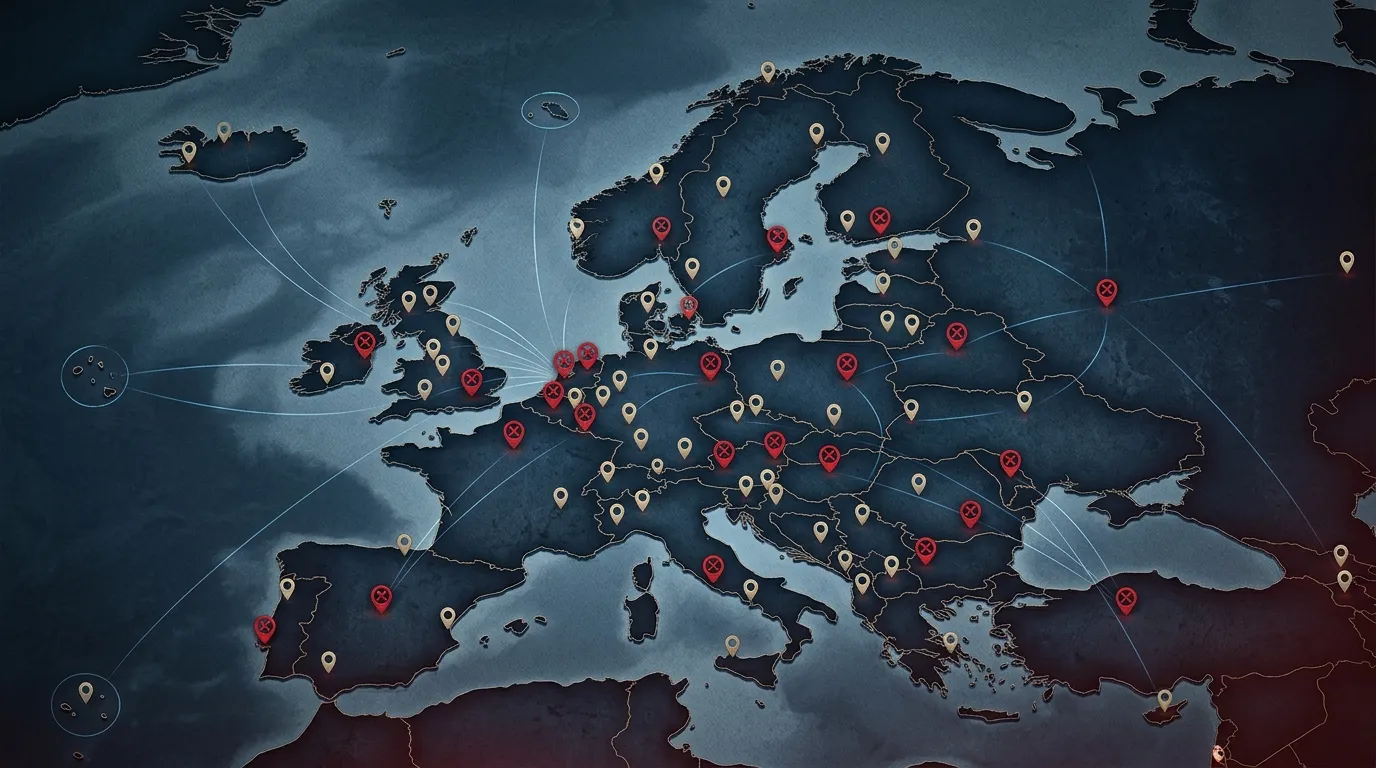
- Reporters link the group to around 160 casinos, of which 145 are blacklisted in at least one European country for operating without a local licence.
- Courts in Germany and Austria have already ruled against the Curaçao shell companies behind several of the sites, ordering player refunds that mostly remain unpaid.
- Former employees allege “predatory” tactics: reopening self-excluded accounts and delaying withdrawals to keep players betting. Soft2Bet denies wrongdoing.
- Soft2Bet categorically denies the allegations and says it operates in full compliance with the law in every jurisdiction where it is licensed.
What is Soft2Bet?
Soft2Bet is a business-to-business iGaming platform provider, the kind of company that supplies the back-end technology, games and payments other operators use to run online casinos and sportsbooks. It was founded in 2016 by Ukrainian-Israeli businessman Uri Poliavich, first in Kyiv and later headquartered around Cyprus and Malta. The company says its software has 10 million users and publicly consists of software sales plus 11 licensed casino and betting brands.
On paper, it is a success story. The group reported €152 million in profit for 2024, collected dozens of industry awards, and was named Workplace of the Year at the high-profile Sigma Awards. Its brands sponsor elite sport: two count Atlético Madrid manager Diego Simeone as an ambassador, another (Tooniebet) is a licensed Canadian Football League partner, and a linked brand, Boomerang, became AC Milan’s regional betting partner in Europe.
According to Investigate Europe, Poliavich took nearly €200 million in dividends between 2019 and 2024, bought an 18-room mansion near New York, and later founded the Yael Foundation, a charity funding religious schools. The investigation is explicit on one point: there is no evidence linking funds from unlicensed gambling to the Yael Foundation.
What the “Soft2Bet Files” allege
The core claim is that the polished public company sat on top of a second, hidden business built around offshore shell companies and blacklisted casinos. Investigate Europe reports obtaining thousands of pages of account statements from two Cypriot entities, Tranello and Tilaros, which it says channelled about €600 million to Soft2Bet and its partners over four years. More than €330 million reportedly went to companies owned by Poliavich, including the group’s then top holding, Outono, and its casino-development arm, Brainrocket.
Transfers were often labelled “marketing services” or “license agreement,” the reporting says. Former staff told reporters the corporate separation was mostly for show.
“Soft2Bet has all these entities in the group but we are the same team. Everyone is part of the same Slack for internal communications.” A former Soft2Bet marketing worker, quoted by Investigate Europe
Chris Kronow Rasmussen, an Adjunct Professor of Investigations at the University of New Haven who reviewed the structure, called the corporate separation “decorative” and described “the braiding of legal and illegal activity” as its defining feature. These are characterizations by sources, not proven findings. Soft2Bet did not address the specific transfers and denies any wrongdoing.
The blacklisted casino network
For years, the investigation alleges, dozens of casinos ran through two Curaçao shell companies, Araxio Development and Rabidi, whose Curaçao licences are not recognised across most of Europe. Curaçao permits are cheap and offshore, and they do not allow operators to legally target players in regulated European markets. Between 2017 and 2024, reporters say Poliavich and a close associate, Denys Butko, used the two vehicles to set up nearly 550 casino URLs. Rabidi alone recorded a €343 million turnover in 2022.
When those companies started appearing on European blacklists, the reporting describes a reshuffle: assets were moved, the shells were declared bankrupt in 2023 and 2024, and operations migrated to new jurisdictions such as Costa Rica and Anjouan, an island in the Indian Ocean that markets cheap gambling licences. Investigate Europe says the group and its partners now run around 160 casinos, of which 145 are blacklisted in at least one European country.
Some of the named brands, such as Wazamba, Rabona and Malina, are ones Soft2Bet has previously acknowledged operating. Others are described in leaked files as “internal.” As one former marketing employee put it to reporters:
“Every couple of weeks they create a new casino. Even if a player thinks they’ve been scammed and leaves a Soft2Bet casino, chances are they’ll end up on another Soft2Bet website without realising.”
The “predatory” allegations from former staff
Investigate Europe spoke to about half a dozen former workers who described aggressive tactics on the unlicensed sites that sat alongside the company’s licensed brands. Their accounts, which the company denies, include reopening the accounts of players who had closed them because of addiction, then targeting them again with SMS, email and bonuses. Reporters say they saw internal conversations in which managers confirmed the practice and framed reopening accounts as a commercial decision.
Withdrawals were allegedly delayed to push players into betting more. One former customer-service agent, who said they cold-called more than 200 new players a day from the group’s Cyprus office, recalled:
“I’ve seen instances where players were like, ‘I’ve been trying to withdraw for two weeks, my rent is due, I can’t feed my kid.’”
Former staff also described a pressurised internal culture, including reports of lie-detector tests, a claim that also appears on an archived recruitment page. Again, these are allegations from ex-employees. Soft2Bet says it takes responsible business practices “extremely seriously.”
The players who took it to court
This is where allegation gives way to court record. Several players sued the shell companies behind the sites, often without knowing Soft2Bet was connected to them, and judges in Germany and Austria sided with them.
- Felix (a pseudonym), a German man, says he lost €245,000 on Wazamba, which handed him “VIP status” rather than flagging his gambling. In 2023, German judges ruled that Rabidi, unlicensed in Germany, owed him his losses. Two years on, the reporting says he is still waiting to be paid.
- Stefan (a pseudonym), an Austrian business owner, told reporters he lost €70,000 on two unlicensed Soft2Bet-linked casinos, bankrupting himself and his firm.
- Rachel (a pseudonym), a single mother in England, says she spent £145,000 after account agents ignored her requests to self-exclude, having already barred herself through the UK’s Gamstop scheme. She found the sites advertised as “non-Gamstop” options.
Spanish regulators fined the shell company Rabidi €5 million over 25 casinos, a penalty the regulator says remains unpaid, and the investigation reports roughly €15 million in Spanish fines across Soft2Bet-linked sites. The four shell companies were declared bankrupt only after their assets had been moved elsewhere.
Onlyspins: a sex-themed casino with no age check
One of the newer brands drew particular attention. Onlyspins, described in leaked May 2025 internal chats about its launch, mixes gambling with sexualised avatars and explicit videos. Investigate Europe reporters found no age or identity verification on the site, which received more than one million visits from EU countries between February and April 2026 and appears to hold no European gambling licence.
When reporters tried to deposit, payments were routed through Trumia, a Malta-regulated payment firm the reporting says is owned by Poliavich and registered at Soft2Bet’s Malta office, and through Zentoria, an Irish-licensed company whose licence covers a different, inactive casino. A former agent called the format “two addictions at the same time.”
Malta’s Bill 55: why winners struggle to get paid
Even when players win in court, collecting is another battle, and much of that traces back to Malta. Under a 2023 law known as Bill 55, Maltese courts can refuse to recognise or enforce foreign judgments against gambling companies registered on the island. Lawyers told Investigate Europe the measure, one called it a “sledgehammer,” effectively shields operators from paying out claims decided elsewhere in the EU.
The scale is large. Lawyers estimate roughly 50,000 gambling claims are pending in Germany and Austria alone. Austria’s highest court has asked the European Court of Justice to rule on whether Bill 55 breaches EU law, and pressure is building on the European Commission to challenge it.
Soft2Bet’s response
Soft2Bet denies the allegations in the strongest terms and did not address the specific transactions. In statements to Investigate Europe and partners, the company said:
“We take compliance, governance and responsible business practices extremely seriously. Information within your request reflects an incorrect and misleading interpretation of our business and corporate structure.”
“We categorically deny the baseless allegations and misleading insinuations presented in your email. Any suggestion that Soft2bet engages in improper activities is entirely false, defamatory, and without merit.”
The company added that it operates “in full adherence to all applicable laws, regulations, and licensing conditions in every jurisdiction where we are authorised to operate.” Founder Uri Poliavich did not personally respond to reporters’ questions. It is worth stressing that the group does hold genuine licences in several regulated markets and has recently secured approvals for specific brands in Italy, Greece and Spain, even as other linked sites appear on those same countries’ blacklists.
Regulators are now looking. The Alcohol and Gaming Commission of Ontario said it is “reviewing the issues and allegations,” Canadian authorities said they would investigate, and the UK Gambling Commission called for a “joined-up approach” to unlicensed gambling without commenting on specifics.
What this means for casino operators
The Soft2Bet Files are, above all, a due-diligence lesson for the B2B side of iGaming. For operators shopping for a turnkey or white-label casino platform, the story is a reminder that a glossy award shelf and big sponsorships tell you very little about compliance. The details that matter are less photogenic: who the ultimate beneficial owner is, which specific entity holds which licence, and whether that licence actually covers the markets you plan to target.
A few practical takeaways from the reporting:
- A Curaçao or Anjouan licence is not a European licence. As our Curaçao vs MGA guide explains, offshore permits do not authorise you to target most EU or UK players, no matter how the platform is marketed.
- Trace the corporate structure. Layers of shell companies and payment agents can obscure who you are really contracting with. Ask for the UBO and the operating entity in writing.
- Reputational and legal exposure is shared. Sponsors, ambassadors and affiliates all got pulled into this story. If a platform’s sister brands are blacklisted, that is your risk too.
None of this is unique to one vendor. It is exactly why our ranking methodology weights licensing and compliance more heavily than any other factor, and why we flag, in plain language, when a provider’s licence footprint does not hold up. Choosing a platform is choosing a compliance posture. Choose the one you would be comfortable defending to a regulator.
Frequently asked questions
What is the Soft2Bet investigation?
It is a year-long cross-border investigation led by Investigate Europe with partners in 15 countries, published as the “Soft2Bet Files.” Using leaked payment statements, internal messages and corporate records, it alleges that Soft2Bet and its partners profited from a hidden network of unlicensed, blacklisted casinos across Europe. Soft2Bet denies any wrongdoing.
Who owns Soft2Bet?
Soft2Bet was founded in 2016 by Ukrainian-Israeli businessman Uri Poliavich, who is also its CEO. The reporting says he took nearly €200 million in dividends between 2019 and 2024 and also runs the Yael Foundation, a charity funding religious schools. Investigators found no evidence linking unlicensed gambling funds to that foundation.
Is Soft2Bet legit?
Soft2Bet is a real, sizeable software company that holds legitimate licences in several regulated markets and recently gained approvals for specific brands in Italy, Greece and Spain. The investigation’s allegations concern a separate network of unlicensed, blacklisted sites it links to the group. The company categorically denies the allegations, and readers should weigh the reporting and the denial for themselves.
Which casinos are linked to Soft2Bet?
Investigate Europe connects around 160 casinos to the group, with 145 blacklisted in at least one European country. Brands named in the reporting include Wazamba, Rabona, Malina, Boomerang, Betina, Campobet and the sex-themed Onlyspins. Some are described as directly owned, others as run for clients using Soft2Bet’s software.
Have any courts ruled against Soft2Bet-linked sites?
Yes. German and Austrian courts have ruled against the Curaçao shell companies Rabidi and Araxio, ordering player refunds. Spanish regulators issued fines. Most of those payouts and fines remain unpaid, partly because of Malta’s Bill 55, which lets Maltese courts refuse to enforce foreign judgments against gambling firms registered there.
What is Malta’s Bill 55?
Bill 55 is a 2023 Maltese law that allows Maltese courts to refuse recognition or enforcement of foreign judgments against gambling companies registered on the island. Critics say it shields operators from paying claims decided in other EU courts. Austria’s highest court has referred the question to the European Court of Justice.
Sources and further reading
This summary is based on the original reporting by Investigate Europe (linked in the opening paragraph) and its Maltese partner Amphora Media. All allegations are theirs and are attributed above; Soft2Bet denies wrongdoing. For related context on our site, see the licensing guide, the compliance stack, and Curaçao vs MGA.